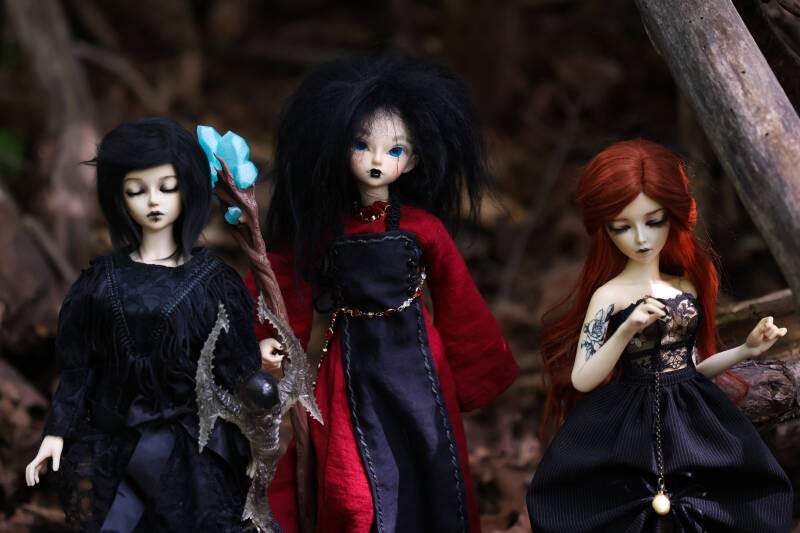
There was a time when doll photography felt much smaller.
In the early days of Instagram, the BJD community was a close-knit corner of the internet. Most collectors followed the same handful of artists, companies, and photographers. Photos were often simple, a doll sitting in a garden, a portrait on a windowsill, or a quick snapshot of a new outfit. There was very little pressure to create cinematic scenes or polished edits. Instagram was a place to document your collection, share your excitement, and connect with people who loved dolls just as much as you did.
Fast forward to today, and the hobby looks very different.
A Worldwide Community
Perhaps the greatest change Instagram brought to the hobby is accessibility.
Fifteen years ago, many collectors relied on forums, Flickr, and company websites to share their work. Finding other BJD enthusiasts often meant joining niche communities and hoping someone lived nearby.
Today, you can instantly connect with collectors from Canada, Japan, South Korea, France, Germany, Brazil, Australia, and almost anywhere else in the world. A single post can inspire thousands of people across multiple countries within hours.
Instagram has transformed what was once a relatively isolated hobby into a truly global community.
Collectors now share everything from face-up progress and sewing tutorials to elaborate fantasy worlds and stop-motion animations. We celebrate new arrivals together, mourn discontinued sculpts together, and cheer each other on as collections grow.
For many people, some of their closest friends were found because of Instagram.
The Rise of Storytelling
One of the biggest shifts I've noticed is the amount of storytelling.
Years ago, many photos simply showcased a doll. The focus was often on the sculpt, clothing, or face-up.
Today, many collectors create entire fictional universes.
Characters have names, personalities, families, romances, villains, companions, magical abilities, and ongoing storylines. A single photograph can become part of a much larger narrative that unfolds over months or even years.
Photography has evolved alongside those stories.
Instead of placing a doll against a simple background, photographers now scout forests, beaches, abandoned buildings, castles, flower fields, and mountain trails. Props, practical effects, lighting equipment, smoke machines, editing software, and detailed costumes have become common tools for bringing fantasy worlds to life.
The line between doll photography and digital storytelling has become beautifully blurred.
A Platform for Creativity and Careers
Instagram has also created opportunities that simply didn't exist before.
Many artists now earn income through their doll-related content.
Photographers sell presets, tutorials, and prints. Face-up artists accept commissions from clients around the world. Wig makers, clothing designers, prop builders, and accessory creators can showcase their work directly to collectors without relying solely on conventions or online marketplaces.
Companies have benefited as well.
Many doll manufacturers actively collaborate with photographers, feature customer images on official pages, and build excitement around new releases through social media. Independent artists can reach audiences that would have been almost impossible to find fifteen years ago.
For some creators, Instagram has become more than a hobby it has become part of their business.
Raising the Creative Bar
As the community has grown, so has the quality of the work being shared.
When you scroll through Instagram today, you'll find breathtaking fantasy scenes, cinematic lighting, incredible costume design, detailed world-building, and edits that rival professional illustrations.
This constant exposure has inspired many collectors including myself to learn new photography techniques, improve editing skills, experiment with lighting, and think more deeply about storytelling.
The community continuously pushes creativity forward.
Each new idea inspires someone else to try something different.
The Downside of Growth
Of course, not every change has been positive.
As Instagram became more competitive, many collectors began feeling pressure to constantly improve.
It's easy to compare your work to photographers who have years of experience, expensive equipment, or access to incredible locations. The endless stream of polished images can sometimes make it feel like your own work isn't enough even when you're creating something you're genuinely proud of.
The platform itself has changed too.
What once felt like a casual photo-sharing app now often feels driven by algorithms, engagement, trends, and consistency. Creators wonder whether they should post reels instead of photos, carousels instead of singles, or follow whatever format currently receives the most attention.
Sometimes it feels like we're creating for the algorithm rather than for ourselves.
One thing I miss about early Instagram is how relaxed it felt.
You could upload a quick snapshot of your newest doll, share a work in progress face-up, or post a simple backyard photo without worrying whether it was "good enough."
There was less pressure to create a masterpiece every time you picked up the camera.
Another challenge is simply being seen.
In Instagram's early years, hashtags were one of the best ways to discover new artists and connect with the wider BJD community.
Today, many collectors feel that posts disappear almost as quickly as they're published. With thousands of new images being uploaded every day and Instagram continually changing how it recommends content, even high quality photography can struggle to reach new audiences.
Many creators now spend almost as much time thinking about captions, hashtags, posting schedules, and the algorithm as they do creating the photographs themselves. While Instagram has made the hobby more connected than ever, it has also made it much harder for smaller creators to be discovered.
Finding a Balance
Despite the challenges, I still believe Instagram has been a positive force for the BJD hobby.
It has connected collectors across continents, introduced us to incredible artists, encouraged us to grow creatively, and helped many people turn their passion into a career.
At the same time, I think it's important to remember why many of us picked up a camera in the first place.
Not because of likes.
Not because of follower counts.
But because we loved our dolls and wanted to share them with others who understood that same joy.
The most memorable photographs aren't always the ones with the highest engagement.
Sometimes they're simply the ones that remind us why we fell in love with this hobby in the first place.
Add comment
Comments